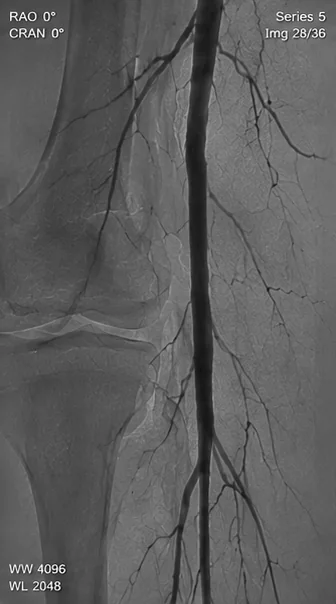
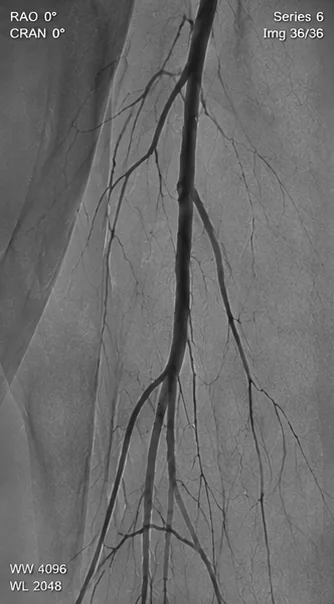
Capture.
Connects to PACS and the EHR. Nothing changes in the room.
PACS
Imaging runs, fluoro series, DICOM metadata
EHR
Orders, nursing log, indications, demographics
Inventory
Device scans, implant logs, supply record
Sylo writes the operative note from the evidence itself — in the exact language the codes require. The record physicians trust, and payers can't deny.
Connects to PACS and the EHR. Nothing changes in the room.
Imaging runs, fluoro series, DICOM metadata
Orders, nursing log, indications, demographics
Device scans, implant logs, supply record
Every step, every device, every procedural event.


Review, sign. Report and codes are complete.
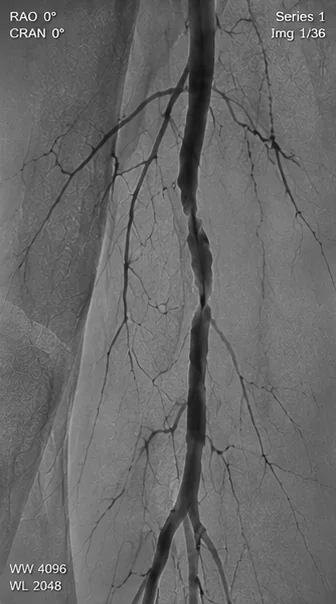
Severe symptomatic left SFA stenosis.
Technical success. No residual dissection or distal embolization.
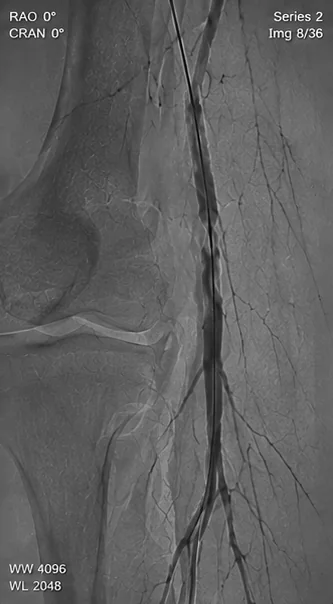
Ultrasound guidance for vascular access
Right CFA access obtained under ultrasound guidance.
// Timestamp 09:02:14
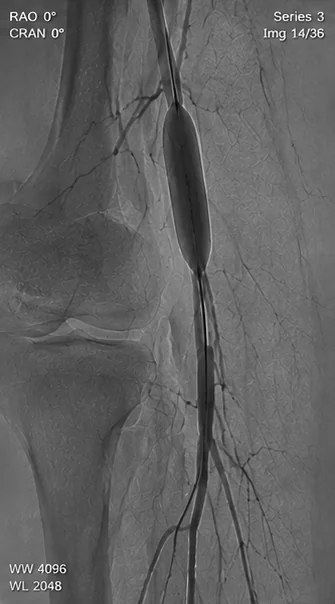
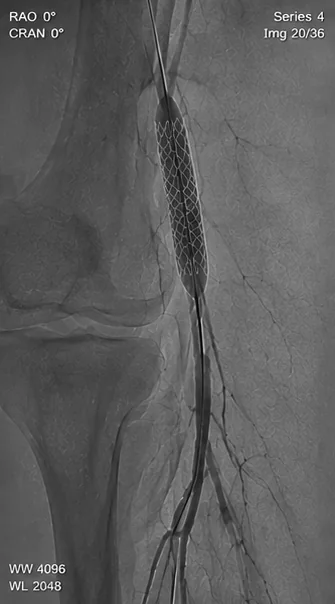
Femoral/popliteal revascularization with stent, includes angioplasty
Covered stent placed across the treated left SFA segment.
// Timestamp 09:27:14
Moderate sedation, 32 min
Moderate sedation administered for 32 minutes.
// Timestamp 09:34:14
of physician time per operative report.
of procedure revenue lost to incomplete documentation and undercoding.
Peripheral and aortic interventions
Image-guided procedures
Stroke and aneurysm interventions
Angiographic imaging, device and inventory scan logs, intra-procedure nursing documentation, and the pre-procedure indication. Sylo reads these sources; it does not require a new capture device in the room.
No. Sylo reconstructs the procedure and drafts the operative record. The physician answers the few questions the evidence cannot settle, reviews, and signs.
The workflow is designed for under one minute of physician time per case.
Yes. In 2026 the lower-extremity revascularization codes expanded from 16 codes (37220–37235) to 46 codes (37254–37299). The new structure is organized by four vascular territories — iliac, femoral/popliteal, tibial/peroneal, and the new inframalleolar territory — by straightforward (stenosis) vs. complex (occlusion) lesions, by initial vessel vs. additional vessels within a territory, and by a treatment hierarchy — angioplasty, stent, atherectomy, stent + atherectomy — plus new add-on codes for intravascular lithotripsy in the iliac and femoral/popliteal territories. Each of these is a documentation requirement. Sylo captures them from the procedure record, not from memory.
Peripheral and neurological endovascular interventions first — angioplasty, stenting, atherectomy, lithotripsy, thrombectomy, and embolization — with more procedure types added with design partners.
Codes are suggested from the procedural evidence and linked to their source. They remain pending coder validation, with final code assignment handled by the practice's coders.
We are working with a small number of endovascular design partners. Book a call and we will walk through your procedure mix and data sources.